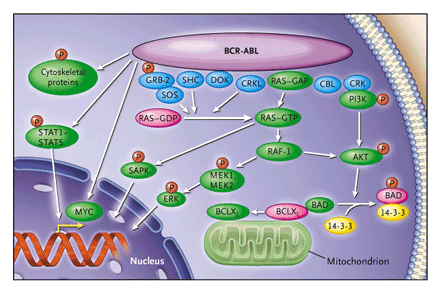
Figure 3. Signal-Transduction Pathways Affected by
BCR-ABL.
The cellular effects of BCR-ABL are exerted through interactions with various proteins that transduce the oncogenic signals responsible for the activation or repression of gene transcription, of mitochondrial processing of apoptotic responses, of cytoskeletal organization, and of the degradation of inhibitory proteins.77 The key pathways implicated so far are those involving RAS, mitogen-activated protein (MAP) kinases, signal transducers and activators of transcription (STAT), phosphatidylinositol 3-kinase (PI3K), and MYC. Most of the interactions are mediated through tyrosine phosphorylation and require the binding of BCR-ABL to adapter proteins such as growth factor receptor–bound protein 2 (GRB-2), DOK, CRK, CRK-like protein (CRKL), SRC-homology–containing protein (SHC), and casitas-B-lineage lymphoma protein (CBL). As we start to dissect these various interactions, we can now design drugs aimed at disrupting specific branches of these pathways, in an attempt either to kill the CML cell or to cause its phenotype to revert to normal. It is obvious that the best target is BCR-ABL proper, since this is the only protein that is exclusive to the leukemic clone. The second-best approach is to target key downstream effectors of BCR-ABL; however, this approach might, in principle, adversely affect normal hematopoiesis as well. P denotes phosphate.