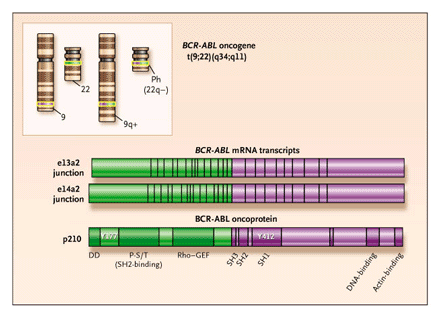
Figure 1. The t(9;22) Translocation and Its Products:
the BCR-ABL Oncogene on the Ph Chromosome and the Reciprocal
ABL-BCR on the Derivative 9q+ Chromosome.
In classic CML, BCR-ABL is transcribed into messenger RNA (mRNA) molecules with e13a2 or e14a2 junctions, which are then translated into the p210BCR-ABL oncoprotein. This oncoprotein is a hybrid containing functional domains from the N-terminal end of BCR (dimerization [DD], SRC-homology 2 [SH2]–binding, and the Rho GTP–GDP exchange-factor [GEF] domains) and the C-terminal end of ABL. (Only SRC-homology regions 2, 3, and 1 [SH2, SH3, and SH1, respectively], and the DNA- and actin-binding domains are shown.) Tyrosine 177 (Y177) in the BCR portion of the fusion gene and tyrosine 412 (Y412) in the ABL portion are important for the docking of adapter proteins and for BCR-ABL autophosphorylation, respectively. P-S/T denotes phosphoserine and phosphothreonine.